So yeah, this Internet thing is really hip with the kids, isn't it? This month's Know the Score is an overview of how musicals have made the leap into the digital age.
Showing posts with label movies. Show all posts
Showing posts with label movies. Show all posts
Monday, August 15, 2016


Monday, August 17, 2015
Know the Score: Independent Film Musicals
They're low-budget, they're different, and it's even odds whether you've heard of them. This month, Know the Score looks at some recent independent musicals on film.
Saturday, December 27, 2014
Know the Score: Annie and Into the Woods
There are two musicals in theaters this holiday season. Which should you see--and which should you avoid? Check out the new Know the Score to find out!
Monday, September 15, 2014
Know the Score: Top Five Muppet Musical Numbers
September 24th is Jim Henson's birthday, so this month Know the Score presents a list of the Top Five Muppet Musical Moments! Not that you can really contain the amount of Muppet music awesome in a five-entry list, but I gave it a shot anyway.
Sunday, June 22, 2014
Know the Score: Jersey Boys
Hey, did you know that there's a new musical movie out this week? Well, judging by the box office you haven't. But I wrote a review about it anyway. Here's my take on Clint Eastwood's Jersey Boys!
Monday, January 20, 2014
Know the Score: Stunt Casting in Film Musicals (plus ANOTHER big annoucement!)
This month, Know the Score looks at the trend of casting star names in Hollywood musicals, and the results (good and bad).
And now, Musical Hell and Know the Score will be featured at RT Gomer Productions! Don't forget we're still on RVT as well. There's never been more ways to get your snarky opinionated commentary on all things dramatically musical!
And now, Musical Hell and Know the Score will be featured at RT Gomer Productions! Don't forget we're still on RVT as well. There's never been more ways to get your snarky opinionated commentary on all things dramatically musical!
Monday, July 23, 2012
Five Musicals That Don't Have Movie Versions Yet (But Should)
Rock of Ages premiered
recently. Les Miserables is
finally making its way into theaters at the end of the year. Wicked
is popular enough that Hollywood
will get to it sooner or later. So what's next? Here's my five
suggestions for musicals that haven't had the film treatment yet, but
should:
1.) Next to
Normal
Musicals
are often large, over-the-top affairs, which is one of the reasons
translating them to film gets so tricky—some things just play
better on the big stage than up close and personal on a camera. Next
to Normal is a very
intimate story, which would lend itself well to a film translation.
You'd have every mature actress in Hollywood who can even remotely
carry a tune lining up to play the broken, mentally unstable Diana,
and almost as many younger generation stars looking to land Natalie
and Gabe. My suggestion for director? Darren Aronofsky, who loves
playing with people's perceptions and who told a chillingly effective
mind-coming-unglued story in Black
Swan.
2.) Miss
Saigon
Like a lot of musicals, this one keeps coming on the radar and
falling off again (the latest rumor: American Idol alum
Jessica Sanchez is gunning for the role of Kim). It really needs to
happen: the Vietnam-era take on Madame Butterfly is a story
that almost begs for an epic cinematic adaptation, with its scenes of
rowdy Marines seeking one last fling in the war's closing days,
parading throngs honoring Ho Chi Minh, crass interpretations of the
American Dream and, of course, the fall of Saigon. (Forget the dinky
little helicopter—imagine what the full scope and chaos of the
Embassy's collapse would look like on screen!)
3.) Into the
Woods
Another musical that seems stuck in the on-again-off-again world of
development Hell, and one that deserves to see the light of day. Rob
Marshall is currently rumored to direct, which would be nice (his
Chicago and Nine, like Into the Woods, both
dealt with interlocking levels of reality)...but might I suggest the
more daring choice of Terry Gilliam? His dark, surreal style seems a
natural fit for this material. And hey, maybe we could get Jonathan
Pryce to play the Narrator.
4.) Sunset
Boulevard
I
know, I know. Andrew Lloyd Webber hasn't had much luck with film
adaptations, and doing a remake of an iconic classic like Billy
Wilder's 1950 movie is just asking for trouble. But I'd still like
to see them try. The score represents Lloyd Webber's last decent
work before descending into his current state of self-derivative
laziness, and trimmed of its excess (does Norma really need two
ballads to mark her grand entrance?) it could play very well on film.
The role of the degraded, deluded Ms. Desmond automatically invokes
grand dame names
such as Close, Streep, and Streisand, and either Hugh Jackman or John
Barrowman could reprise their stage performance as Joe Gillis.
5.) Once on
This Island
There's been a few animated movies that made the crossover to live
Broadway shows, but not a whole lot of stage shows being turned into
animated features—the only one I can think of off the top of my
head is the 1999 The King and I, which did not turn out well
to put it extremely mildly. That said, I think Once on This
Island could work very well as an animated film, or rather as a
mixture of live-action and animation to suit its framing device of
Caribbean peasants passing a storm by telling each other a story.
Being a solid ensemble piece, it has a lot of potential for
assembling a broad range of talent...though Queen Latifah would be
inevitable for Asaka.
Honorable
Mentions: The Secret Garden,
In the Heights, Ragtime, Avenue Q
Your turn: What musical would you want to see brought to film
(assuming that, you know, they wouldn't mess it up)?
Monday, July 16, 2012
Five Performing Arts Movie Cliches That Just Need to Die, Already
So, have you seen the trailer for Pitch
Perfect yet? It's about a
college a capella group
made up of colorfully diverse members who must get their act together
in time for a big competition! How exciting! How inspring!
How...like just about every other performing arts film out there.
Whether it's about
singing, dancing, theater, marching band, or what have you, movies
focusing on the arts rank only below romantic comedies and Adam
Sandler films for sheer formula. You would think that, being one of
the few genres the people making them have some form of personal
experience in, there would be a broader range of experiences,
characters, and stories to draw from, rather than resorting to the
same collection of plot points. Yet, inevitably, there they are.
It's like the Hollywood version of the Stations of the Cross.
It's time to shake
things up. Let's start by striking the following cliches from the the
performing arts film set list:
1.) The
“Unlikely” Talent
He's the star quarterback and big man on campus—but when he showers
after practice, he belts out tunes in a voice to rival Jeremy Jordan!
She's a shy, bookish wallflower—but take her glasses off and pull
her hair out of that bun, and she'll set the dance floor ablaze!
Who'd have thunk it? Well, anybody who doesn't think of people as
two-dimensional cookie cutter shapes.
Such is the entertainment industry's commitment to well-worn
stereotypes that it expects us to be genuinely surprised when it
momentarily deviates from them. (This is the driving force behind
Susan Boyle's entire career.) Look, Hollywood, you know better.
You have Vin Disel playing Dungeons and Dragons in his
off-hours and Wolverine singing Jean Valjean. Talent doesn't adhere
to any set profile—you know it, we know it, so don't expect to be
congratulated when your leading lady isn't a drama queen and the
leading man isn't the other kind of drama queen, okay?
2.) The
Disapproving Parent
Maybe dad wants them to crack down on the studying rather than
wasting time on “frivolous” pursuits. Maybe mom couldn't cut it
as a singer, and doesn't want her baby to deal with the same
heartbreak. Maybe writers feel Mama Rose cornered the market on
aggressively supportive parents and are looking in the other
direction for inspiration. Whatever the reason, nearly every
starry-eyed protagonist is guaranteed to have some sort of parent or
other authority figure whose sole purpose is to fold their arms and
frown angrily as their child stays out late for rehearsal, goes
dancing with the boy from the wrong side of the tracks and generally
“follows their heart” or some broad concept like that. It's
maudlin attempt to add domestic drama into the proceedings that
almost invariably ends up feeling contrived.
Besides, we all know how it will end. The kid goes ahead and
performs (usually after some defiant “this is who I am and if you
don't like it tough” speech to the parent), and right in the middle
of their big moment who should walk in at the back of the auditorium?
Dear old Mom/Dad, who is so dazzled by their child's talent that
they relent and give a silent nod of approval as the audience
applauds. (About the only movie that doesn't end the scenario this
way is Dead Poet's Society, which probably figured it had
enough contrivances to be getting on with as is.)
3.) The Radical
New Program
Every time a movie focuses on a struggling ensemble going into a
competition as a major underdog—and who ever makes movies about
seasoned professionals who are favorites to win?--the key to success
ultimately hinges on one idea: “Hey, what are we doing performing
this old fuddy-duddy stuff? We need to have a fresh, up-to-date
program that The Kids These Days will find hip and relevant!”
Shock and horror! The old guard blusters and mutters about the
unorthodoxy of it all, but inevitably the bold new direction is a hit
with the judges, who are apparently giving scores based on the
music's copyright date.
This is a frustrating false dichotomy. Why are the choices always
limited to “boring old stuff” and “cool new stuff”? Why does
there even have to be a choice—shouldn't versatility be
praised and encouraged? For that matter, who says the old stuff is
automatically boring, anyway? I'd like to see a competition where a
choir does some mediocre Hal Leonard arrangement of a top-40 hit,
only to be blown away by another group doing an expert rendition of
the Verdi Dies Irae.
4.) The Two-Girl
Rivalry
Whether its within the ranks or between competitors, large ensembles
or solo performers, 90% of the time the main conflict comes down to
the two principal female characters locking horns. Sometimes the two
have a “worthy rivals” thing going on, in which case they make
peace by the end, but more often Hollywood helps us out by making one
girl absolutely evil so we'll know who to root for. The evil girl
spends the entire movie being catty, unprincipled, and theoretically
less talented than the nice-girl heroine. In teen-centric films
she'll almost invariably be rich, so she can flaunt her designer
clothes and shallow evilness while being catty and unprincipled.
(Ever notice how the people who spend the most time talking about how
rich people are evil and terrible compared to the worthy middle and
lower classes are always the ones who have more money than they know
what to do with?) Worry not, fair viewers, for sure as the sun rises
she will be humiliated in the third act, and will be left in the
wings stomping her foot and pouting as the nice-girl heroine gets her
moment of triumph.
I don't know why movies keep pitting women against each other. Maybe
the writers hope it will eventually lead to cat-fighting, which of
course leads to lady sexytimes, which is the ultimate goal of every
male of the species. Or maybe it makes it easier for them to throw
the male lead into the mix and get a love triangle going. Speaking
of which...
5.) The
Awkwardly Inserted Romance
The musical version of Aida insists “every story is a love
story,” at it's a motto that movies have taken to heart. No movie
is complete without a budding romance between two of the lead
characters, not even performance films. It might be the little rich
girl hooking up with the talented boy from the wrong side of the
tracks, or the aspiring actor who has to decide whether to follow the
limelight or the lady of his dreams. What it will almost never be is
done well.
No matter who the protagonists are, romances in performance films
always seem to come with soppy music, ridiculous complications, and
“romantic” dialogue that makes the stuff from Attack of the
Clones sound like Shakespeare's 116th sonnet. It's
cheesy, it's insulting, and it always stops the story dead. Why do
we care whether or not these two kids (who are probably too young to
be thinking about lifetime commitments anyway) get together or not?
Just shut up and sing.
Monday, July 9, 2012
The Lost Art Of Musical Direction
The good news for musical fans in recent years is that Hollywood is making musicals again. The bad news is that, with a handful of exceptions, it's still not making them very well. Part of that can be chalked up to good old fashioned Sturgeon's Law, but I think it's a bit deeper then that. I think the art of directing a movie musical has become something of a lost art in recent years. Or, to put it another way, I think the idea of handling a musical makes a lot of directors soil themselves.
Something about the very concept turns them off, I think. “People don't just burst into song and dance with complete strangers at the drop of a hat!” Well no, they don't. Nor have they ever spoken in iambic pentameter (even in Shakespeare's time) or walked calmly away from an exploding building with ash falling around them in slow motion and their hair waving in the aftershock in an attractive manner. Hell, if we were to list everything in movies that doesn't happen the way it does in real life, we'd be here all night. Or we'd be writing TVTropes entries, in which case we'd be there all night. Movies are all about the art of making audiences believe the impossible, but for some reason lovers serenading each other with a heartfelt duet while the orchestra swells is one impossibility directors have deemed impossible to sell.
So they cheat, as best they can. Rob Marshall made the songs in Chicago take place in Roxie's imagination (a gimmick that actually worked because Chicago itself is built around a gimmick, that of telling a story within the confines of a vaudeville show). Tim Burton removed the chorus numbers from Sweeney Todd. Joel Schumacher had the cast of Phantom of the Opera speak several lyrical passages (and if you thought Charles Hart's lyrics were a bit awkward before, try hearing them recited by Emmy Rossum in a tone that suggests she's reading to a group of kindergartners). Anything they can think of to avoid dealing with the fact that, sooner or later, you're going to have a person belting their heart's desire out at the top of their lungs.
I think music videos are part of the problem, too. Not that there's anything wrong with them—but they're a fundamentally different medium. Music videos can tell the story of the song, or they can tell a completely different story, or they can just be some attractive images to look at while the song is playing. Which is fine, for about five minutes. But in a two hour movie, there had better be a very strong connection with what's happening on screen and the lyrics coming out of the singer's mouth; otherwise, the movie just stops dead for several minutes while the actors pose and sing. Chris Columbus' Rent is a notable offender here. Take the emotionally charged duet “What You Own.” This song takes place at a significant dramatic point in the musical: Roger and Marc are alone, miles apart, and trying to figure out what meaning (if any) there is in their lives. Yet rather than explore the thought processes and development of the characters, Columbus spends a good portion of time filming Roger standing against a Southwest landscape like something out of a Bon Jovi song. And when Marc decides he's not going to sell out (“Alexi? Marc./Call me a hypocrite/I need to finish my own film/I quit!”) he doesn't say the line to his would-be boss—he just shouts it from a rooftop. Come on, Columbus, would it have been that hard to have Marc say the line into a phone?
I think that's why I have such high hopes for Les Miserables right now: Tom Hooper seems to get it. By having his cast sing live, he shows that he understands what makes a musical work. The songs are not gimmicks, not interludes from the action, but a vital part in telling the story dramatically. What a novel idea.
Something about the very concept turns them off, I think. “People don't just burst into song and dance with complete strangers at the drop of a hat!” Well no, they don't. Nor have they ever spoken in iambic pentameter (even in Shakespeare's time) or walked calmly away from an exploding building with ash falling around them in slow motion and their hair waving in the aftershock in an attractive manner. Hell, if we were to list everything in movies that doesn't happen the way it does in real life, we'd be here all night. Or we'd be writing TVTropes entries, in which case we'd be there all night. Movies are all about the art of making audiences believe the impossible, but for some reason lovers serenading each other with a heartfelt duet while the orchestra swells is one impossibility directors have deemed impossible to sell.
So they cheat, as best they can. Rob Marshall made the songs in Chicago take place in Roxie's imagination (a gimmick that actually worked because Chicago itself is built around a gimmick, that of telling a story within the confines of a vaudeville show). Tim Burton removed the chorus numbers from Sweeney Todd. Joel Schumacher had the cast of Phantom of the Opera speak several lyrical passages (and if you thought Charles Hart's lyrics were a bit awkward before, try hearing them recited by Emmy Rossum in a tone that suggests she's reading to a group of kindergartners). Anything they can think of to avoid dealing with the fact that, sooner or later, you're going to have a person belting their heart's desire out at the top of their lungs.
I think music videos are part of the problem, too. Not that there's anything wrong with them—but they're a fundamentally different medium. Music videos can tell the story of the song, or they can tell a completely different story, or they can just be some attractive images to look at while the song is playing. Which is fine, for about five minutes. But in a two hour movie, there had better be a very strong connection with what's happening on screen and the lyrics coming out of the singer's mouth; otherwise, the movie just stops dead for several minutes while the actors pose and sing. Chris Columbus' Rent is a notable offender here. Take the emotionally charged duet “What You Own.” This song takes place at a significant dramatic point in the musical: Roger and Marc are alone, miles apart, and trying to figure out what meaning (if any) there is in their lives. Yet rather than explore the thought processes and development of the characters, Columbus spends a good portion of time filming Roger standing against a Southwest landscape like something out of a Bon Jovi song. And when Marc decides he's not going to sell out (“Alexi? Marc./Call me a hypocrite/I need to finish my own film/I quit!”) he doesn't say the line to his would-be boss—he just shouts it from a rooftop. Come on, Columbus, would it have been that hard to have Marc say the line into a phone?
I think that's why I have such high hopes for Les Miserables right now: Tom Hooper seems to get it. By having his cast sing live, he shows that he understands what makes a musical work. The songs are not gimmicks, not interludes from the action, but a vital part in telling the story dramatically. What a novel idea.
Wednesday, May 30, 2012
(Over)Analyzing the Les Miserables Trailer
So with the premiere of the Les Miserables teaser trailer, my personal embargo on Les Mis footage comes to an end (confession time: I wasn't really doing all that good at it anyway). If Universal Studios feels comfortable releasing it, then I feel comfortable going through the entire thing with a fine-tooth comb.
(What's that? You haven't seen the trailer yet? What happened, did you get lost hiking in the mountains or something? Oh never mind, here it is:)
I do like the way Anne Hathaway sounds on this. When it comes to musicals I'm not a huge stickler for technical accuracy, so long as there is enough command of pitch, tone, and phrasing to keep it from sounding completely awful (though as Pierce Brosnan in Mamma Mia! proves, some movies have trouble fulfilling even that basic requirement). What is more important to me is how well the singing fits the style of the music and the nature of the character. Renee Zelweiger works as Roxie Hart because she sounds like a vaudeville wannabe with more ambition than talent; Emmy Rossum doesn't work as Christine Daae because she doesn't sound like a young opera prodigy. Hathaway's raw, emotionally gutted rendition of "I Dreamed a Dream" fits Fantine's wretchedness, despair, and humiliation, and that makes it very powerful and moving.
I've heard complaints that the trailer "doesn't tell enough of the story," but what of it? To begin with, expecting a detailed recap of Les Miserables in ninety seconds of film is a bit much. Secondly, I'm rather tired of trailers that show you every single important scene in the film. Where's the fun in that? I am thrilled with what's on display so far, confirming my belief that the knack Tom Hooper displayed for creating effective images in The King's Speech would serve this material very well. I can't decide which moment in this trailer I like best. Valjean falling to his knees before the altar? The whores bursting out of the brothel like slutty bats out of Hell? Poor little Cosette lost in the forest? It all looks so amazing.
Well, almost all of it. I will say I'm not quite satisfied with the way Samantha Barks looks as Eponine: too neat and pretty. This tends to happen a lot in the stage version as well, where Eponine just looks a little scruffy with an artfully smudged face rather than a desperately poor girl suffering under a lifetime of destitution and two of the worst parents in literature. I suspect this has something to do with making her more appealing to all the angsty teen girls who inevitably identify with "On My Own." (Yes, I was one of those girls at one point. Wasn't every music theater geek girl of my generation?) But if that's all I have to complain about, this movie should be in excellent shape. Roll on December!
(What's that? You haven't seen the trailer yet? What happened, did you get lost hiking in the mountains or something? Oh never mind, here it is:)
I do like the way Anne Hathaway sounds on this. When it comes to musicals I'm not a huge stickler for technical accuracy, so long as there is enough command of pitch, tone, and phrasing to keep it from sounding completely awful (though as Pierce Brosnan in Mamma Mia! proves, some movies have trouble fulfilling even that basic requirement). What is more important to me is how well the singing fits the style of the music and the nature of the character. Renee Zelweiger works as Roxie Hart because she sounds like a vaudeville wannabe with more ambition than talent; Emmy Rossum doesn't work as Christine Daae because she doesn't sound like a young opera prodigy. Hathaway's raw, emotionally gutted rendition of "I Dreamed a Dream" fits Fantine's wretchedness, despair, and humiliation, and that makes it very powerful and moving.
I've heard complaints that the trailer "doesn't tell enough of the story," but what of it? To begin with, expecting a detailed recap of Les Miserables in ninety seconds of film is a bit much. Secondly, I'm rather tired of trailers that show you every single important scene in the film. Where's the fun in that? I am thrilled with what's on display so far, confirming my belief that the knack Tom Hooper displayed for creating effective images in The King's Speech would serve this material very well. I can't decide which moment in this trailer I like best. Valjean falling to his knees before the altar? The whores bursting out of the brothel like slutty bats out of Hell? Poor little Cosette lost in the forest? It all looks so amazing.
Well, almost all of it. I will say I'm not quite satisfied with the way Samantha Barks looks as Eponine: too neat and pretty. This tends to happen a lot in the stage version as well, where Eponine just looks a little scruffy with an artfully smudged face rather than a desperately poor girl suffering under a lifetime of destitution and two of the worst parents in literature. I suspect this has something to do with making her more appealing to all the angsty teen girls who inevitably identify with "On My Own." (Yes, I was one of those girls at one point. Wasn't every music theater geek girl of my generation?) But if that's all I have to complain about, this movie should be in excellent shape. Roll on December!
Monday, May 21, 2012
10 Best Musical Moments in Non-Musicals
If there's one thing better than a really good musical, it's a really good musical sequence in a non-musical film or series. Music is always present in film and television—enhancing mood, establishing characters, and conveying the setting—but when it becomes the focus of the moment it can, if done properly, create something extraordinary. Romance becomes deeper, loss more wrenching, comedy funnier, and triumph even more awesome.
So here's my list of the ten best interludes, montages, musical episodes, and other delights from movies and shows that don't normally step into the song and dance zone.
10.) “Hallelujah” from Shrek
With its overly sincere recital of melodramatic, metaphor-heavy lyrics (“I saw your flag from the marble arch/But love is not a vict'ry march/It's a cold and it's a broken Hallelujah”), Leonard Cohen's oft-covered ballad can be cheesy in the extreme if done wrong, or a gut-punching tearjerker if done right. The first Shrek film, using a version performed by John Cale, gets it right. It appears during the emotional low point of the film, with Shrek and Princess Fiona separated and alone after a mutual misunderstanding derailed their budding affection. He's returned to his cherished, isolated swamp, she is preparing for her wedding to diminutive tyrant Lord Farquaad. Both have what they've been fighting for the entire movie, and both of them couldn't be more miserable about it. The song fits the regret and hopelessness in the scene, and the dissolves between the characters are remarkably well-done.
9.) “Mayhem of the Music Meister!”, Batman: The Brave and the Bold
Whenever a series does a musical episode, the question arises: how do we get these people who don't normally sing and dance singing and dancing? Dream sequence? Just run with it and pretend nothing weird is going on? Sure, those routes can work fine. But if you're working with a show that already has a touch of the fantastic about it, there's one way to provide an in-universe justification for the concept: introduce a character who brings the singing and dancing with them. “Mayhem of the Music Meister” is one of two great musical episodes that employs this idea. The titular antagonist (voiced by special guest villain Neil Patrick Harris) is a former choir geek who discovered his singing had hypnotic capabilities, and plans to use this power in the most tuneful plan for world domination ever devised. The result meshes well with the Silver Age silliness inherent in the show, and thanks to Harris is a lot of fun to listen to.
(Note: decent embed-able scenes from this cannot currently be found on YouTube. Go look it up, it's awesome.)
8.) “Do You Wanna Date My Avatar?”, cast of The Guild
Take one undisputed Queen of the Internet (Felicia Day), one highly underrated musical talent (Jed Whedon), throw in a bunch of geek double entendre lyrics (“Tank 'n' spank,” anyone?) and a catchy dance beat and set the whole thing to a parody of every “sexy music video” cliché ever, and what do you get? One of the most entertaining commercials ever made. Designed as a promotion for web series The Guild's second season, the video features Day and her cast-mates spoofing the wish fulfillment of roleplay gaming and online relationships, and generally having a blast in front of the camera. The result is so effortlessly funny and entertaining that it manages to wrap all the way back around to sexy. (“Hotter than reality by far”? That's hard to imagine.) The Guild has made other music videos (the Bollywood-inspired “Game On” and geek revenge anthem “I'm the One That's Cool”), but this first one remains their best.
7.) “Toobular Boobular Joy,” Mystery Sciencce Theater 3000
Lots of comedy teams have a decent songwriter or two in their ranks, and the writers of the greatest snark show to ever mock a horrible movie is no exception. The MST3K writers often put a little music into their host segments, frequently to excellent effect. (Among the honorable mentions: The ultra-PC “Merry Christmas (If That's Okay),” Mike's parody of Girl in Gold Boots' love ballad, and the wonderfully inane “”When Loving Lovers Love.”) But perhaps the funniest is their "Supercalifragilisticexpialidocious"-esqe attempt to describe the sheer amounts of skin on display in the sword-and-sorcery cheapie Outlaw. The tongue-tying list of adjectives ranges from the clinically anatomical to cheerfully blatant--”A latissimal-dorsical, hung-like-a-horsical, calipyligical ball”--and was probably as fun to invent as it is to listen to. Hey guys, how's the movie?
6.) “HMS Yakko,” Animaniacs
There had to have been some serious musical geeks on the Animaniacs writing staff. How else do you explain the dog-and-cat team of Rita and Runt doing an extended parody of Les Miserables? Or the Warner Brothers (and their sister Dot) turning their mischief on a short, puffy-lipped, egotistical composer who is an extremely obvious Andrew Lloyd Webber parody? But as always, it's Gilbert and Sullivan who prove to have the best filking fodder. The plot follows the same basic form as most of the Yakko, Wakko, and Dot shorts (the trio find someone who really needs to be taken down a peg, and proceed to do so with great glee), but the clever parodying of key HMS Pinafore and Pirates of Penzance songs make it one of the most memorable moments in the series. Even the inevitable “Modern Major General” rewrite is carried of with panache.
5.) “When She Loved Me,” Toy Story 2
Despite not dabbling in full-blown musicals (unlike Disney's traditional animation wing), the folks at Pixar know how to use the score to incredible effect. Remember WALL-E's fondness for Hello Dolly, or The Incredibles' jazzy James Bond-esque soundtrack? But when people talk about Pixar moments that really stick with them, this song almost inevitably comes up. Sung by Sarah MacLachlan, it accompanies Jesse the cowgirl doll's memories of her first owner Emily, who loved her and played with her until inevitably dolls and playtime gave way to rock music and lipstick. It's a wonderful encapsulation of the central tragedy of the Toy Story series: that the characters must inevitably watch the children they love grow old and forsake them. And I realize I just used the word “tragedy” to describe a movie series about talking toys. What can I say, Pixar really is that good.
4.) “Springtime for Hitler,” The Producers (1968)
There is a certain genius to writing deliberately bad music well. It needs to be bad, certainly, but it needs to be bad in a way that the audience finds entertaining and funny rather than grating. And “Springtime for Hitler” is quite possibly the best bad musical number ever devised. From its light and cheerful celebration of the Third Reich to its wonderfully cheesy choreography and even cheesier showgirl costumes, it's an amusingly awful sample of the show Messrs. Bialystock and Bloom have hit on as the worst play ever written. When The Producers went full musical, it inevitably expanded the number into a full-blown production, but wisely left the audience's silent, gape-mouthed reaction untouched. Why mess with the best “What the F*CK was that?” take in film?
3.) “Once More With Feeling,” Buffy the Vampire Slayer
Leave it to Joss Whedon to take the concept of the musical episode and turn it into something more than a gimmick. With a plot that examines some of the major issues that had been building for the first half of Buffy's sixth season, “Once More With Feeling” is more than just a plain old song and dance. Like “Mayhem of the Music Meister” it uses the in-universe explanation of an antagonist forcing the regular cast to sing their hearts out—in this case, a smooth, sharp-dressed demon named Sweet who forces people to express their deepest thoughts and darkest secrets musically until they literally self-destruct. (Pretty clever meta-commentary on the genre, that.) Whedon knows his cast's strengths, giving major solos to the best singers (Amber Benson, Anthony Stewart-Head) and keeping the less talents ones (Allyson Hannigan) in the background. Only two things prevent this episode from being higher on the list: the reveal of how Sweet came to Sunnydale is ultimately unsatisfying, and it was the last time Buffy was really good.
2.) Pippin's Song, Lord of the Rings: Return of the King
Howard Shore's score for the Lord of the Rings trilogy is an extended exercise in awesome. (Heard the symphonic version yet? If not, get thee to YouTube right away!) So it's kind of ironic that the best musical moment in the trilogy doesn't belong to him, but to actor Billy Boyd. Boyd not only sings this adaptation of “Upon the Hearth the Fire is Red,” he composed it's simple, folk-ballad melody. The song is juxtaposed with scenes of Faramir leading a charge to battle (and doom) at the hands of the orcs, encapsulating the trilogy's overarching theme of simple folk caught up (and making a difference) in world-shaking events. If you can watch it without crying...well, you're made of sterner stuff than I am. Which isn't saying much, but still.
1.) “Always Look on the Bright Side of Life,” Monty Python's Life of Brian
Let's face it, the Pythons are concentrated awesome. This is a scientifically proven fact. And there are a lot of musical segments they did that could have wound up on this list (“Knights of the Round Table” and “Every Sperm is Sacred” to name just a couple). But I always point to Life of Brian as my favorite Monty Python project, so that means the top honor goes to Eric Idle singing a cheerful little ditty as pretty much the entire cast gets crucified. There's a terrific irony to the scene that, somehow, circles back around to wisdom: life can be pretty awful, but it's what we've got so we might as well enjoy it. No surprise that a lot of people shuffling off their mortal coils (including the Python's own Graham Chapman) have this sung at their funerals, sending them off with one last laugh.
So here's my list of the ten best interludes, montages, musical episodes, and other delights from movies and shows that don't normally step into the song and dance zone.
10.) “Hallelujah” from Shrek
With its overly sincere recital of melodramatic, metaphor-heavy lyrics (“I saw your flag from the marble arch/But love is not a vict'ry march/It's a cold and it's a broken Hallelujah”), Leonard Cohen's oft-covered ballad can be cheesy in the extreme if done wrong, or a gut-punching tearjerker if done right. The first Shrek film, using a version performed by John Cale, gets it right. It appears during the emotional low point of the film, with Shrek and Princess Fiona separated and alone after a mutual misunderstanding derailed their budding affection. He's returned to his cherished, isolated swamp, she is preparing for her wedding to diminutive tyrant Lord Farquaad. Both have what they've been fighting for the entire movie, and both of them couldn't be more miserable about it. The song fits the regret and hopelessness in the scene, and the dissolves between the characters are remarkably well-done.
9.) “Mayhem of the Music Meister!”, Batman: The Brave and the Bold
Whenever a series does a musical episode, the question arises: how do we get these people who don't normally sing and dance singing and dancing? Dream sequence? Just run with it and pretend nothing weird is going on? Sure, those routes can work fine. But if you're working with a show that already has a touch of the fantastic about it, there's one way to provide an in-universe justification for the concept: introduce a character who brings the singing and dancing with them. “Mayhem of the Music Meister” is one of two great musical episodes that employs this idea. The titular antagonist (voiced by special guest villain Neil Patrick Harris) is a former choir geek who discovered his singing had hypnotic capabilities, and plans to use this power in the most tuneful plan for world domination ever devised. The result meshes well with the Silver Age silliness inherent in the show, and thanks to Harris is a lot of fun to listen to.
(Note: decent embed-able scenes from this cannot currently be found on YouTube. Go look it up, it's awesome.)
8.) “Do You Wanna Date My Avatar?”, cast of The Guild
Take one undisputed Queen of the Internet (Felicia Day), one highly underrated musical talent (Jed Whedon), throw in a bunch of geek double entendre lyrics (“Tank 'n' spank,” anyone?) and a catchy dance beat and set the whole thing to a parody of every “sexy music video” cliché ever, and what do you get? One of the most entertaining commercials ever made. Designed as a promotion for web series The Guild's second season, the video features Day and her cast-mates spoofing the wish fulfillment of roleplay gaming and online relationships, and generally having a blast in front of the camera. The result is so effortlessly funny and entertaining that it manages to wrap all the way back around to sexy. (“Hotter than reality by far”? That's hard to imagine.) The Guild has made other music videos (the Bollywood-inspired “Game On” and geek revenge anthem “I'm the One That's Cool”), but this first one remains their best.
7.) “Toobular Boobular Joy,” Mystery Sciencce Theater 3000
Lots of comedy teams have a decent songwriter or two in their ranks, and the writers of the greatest snark show to ever mock a horrible movie is no exception. The MST3K writers often put a little music into their host segments, frequently to excellent effect. (Among the honorable mentions: The ultra-PC “Merry Christmas (If That's Okay),” Mike's parody of Girl in Gold Boots' love ballad, and the wonderfully inane “”When Loving Lovers Love.”) But perhaps the funniest is their "Supercalifragilisticexpialidocious"-esqe attempt to describe the sheer amounts of skin on display in the sword-and-sorcery cheapie Outlaw. The tongue-tying list of adjectives ranges from the clinically anatomical to cheerfully blatant--”A latissimal-dorsical, hung-like-a-horsical, calipyligical ball”--and was probably as fun to invent as it is to listen to. Hey guys, how's the movie?
6.) “HMS Yakko,” Animaniacs
There had to have been some serious musical geeks on the Animaniacs writing staff. How else do you explain the dog-and-cat team of Rita and Runt doing an extended parody of Les Miserables? Or the Warner Brothers (and their sister Dot) turning their mischief on a short, puffy-lipped, egotistical composer who is an extremely obvious Andrew Lloyd Webber parody? But as always, it's Gilbert and Sullivan who prove to have the best filking fodder. The plot follows the same basic form as most of the Yakko, Wakko, and Dot shorts (the trio find someone who really needs to be taken down a peg, and proceed to do so with great glee), but the clever parodying of key HMS Pinafore and Pirates of Penzance songs make it one of the most memorable moments in the series. Even the inevitable “Modern Major General” rewrite is carried of with panache.
5.) “When She Loved Me,” Toy Story 2
Despite not dabbling in full-blown musicals (unlike Disney's traditional animation wing), the folks at Pixar know how to use the score to incredible effect. Remember WALL-E's fondness for Hello Dolly, or The Incredibles' jazzy James Bond-esque soundtrack? But when people talk about Pixar moments that really stick with them, this song almost inevitably comes up. Sung by Sarah MacLachlan, it accompanies Jesse the cowgirl doll's memories of her first owner Emily, who loved her and played with her until inevitably dolls and playtime gave way to rock music and lipstick. It's a wonderful encapsulation of the central tragedy of the Toy Story series: that the characters must inevitably watch the children they love grow old and forsake them. And I realize I just used the word “tragedy” to describe a movie series about talking toys. What can I say, Pixar really is that good.
4.) “Springtime for Hitler,” The Producers (1968)
There is a certain genius to writing deliberately bad music well. It needs to be bad, certainly, but it needs to be bad in a way that the audience finds entertaining and funny rather than grating. And “Springtime for Hitler” is quite possibly the best bad musical number ever devised. From its light and cheerful celebration of the Third Reich to its wonderfully cheesy choreography and even cheesier showgirl costumes, it's an amusingly awful sample of the show Messrs. Bialystock and Bloom have hit on as the worst play ever written. When The Producers went full musical, it inevitably expanded the number into a full-blown production, but wisely left the audience's silent, gape-mouthed reaction untouched. Why mess with the best “What the F*CK was that?” take in film?
3.) “Once More With Feeling,” Buffy the Vampire Slayer
Leave it to Joss Whedon to take the concept of the musical episode and turn it into something more than a gimmick. With a plot that examines some of the major issues that had been building for the first half of Buffy's sixth season, “Once More With Feeling” is more than just a plain old song and dance. Like “Mayhem of the Music Meister” it uses the in-universe explanation of an antagonist forcing the regular cast to sing their hearts out—in this case, a smooth, sharp-dressed demon named Sweet who forces people to express their deepest thoughts and darkest secrets musically until they literally self-destruct. (Pretty clever meta-commentary on the genre, that.) Whedon knows his cast's strengths, giving major solos to the best singers (Amber Benson, Anthony Stewart-Head) and keeping the less talents ones (Allyson Hannigan) in the background. Only two things prevent this episode from being higher on the list: the reveal of how Sweet came to Sunnydale is ultimately unsatisfying, and it was the last time Buffy was really good.
2.) Pippin's Song, Lord of the Rings: Return of the King
Howard Shore's score for the Lord of the Rings trilogy is an extended exercise in awesome. (Heard the symphonic version yet? If not, get thee to YouTube right away!) So it's kind of ironic that the best musical moment in the trilogy doesn't belong to him, but to actor Billy Boyd. Boyd not only sings this adaptation of “Upon the Hearth the Fire is Red,” he composed it's simple, folk-ballad melody. The song is juxtaposed with scenes of Faramir leading a charge to battle (and doom) at the hands of the orcs, encapsulating the trilogy's overarching theme of simple folk caught up (and making a difference) in world-shaking events. If you can watch it without crying...well, you're made of sterner stuff than I am. Which isn't saying much, but still.
1.) “Always Look on the Bright Side of Life,” Monty Python's Life of Brian
Let's face it, the Pythons are concentrated awesome. This is a scientifically proven fact. And there are a lot of musical segments they did that could have wound up on this list (“Knights of the Round Table” and “Every Sperm is Sacred” to name just a couple). But I always point to Life of Brian as my favorite Monty Python project, so that means the top honor goes to Eric Idle singing a cheerful little ditty as pretty much the entire cast gets crucified. There's a terrific irony to the scene that, somehow, circles back around to wisdom: life can be pretty awful, but it's what we've got so we might as well enjoy it. No surprise that a lot of people shuffling off their mortal coils (including the Python's own Graham Chapman) have this sung at their funerals, sending them off with one last laugh.
Monday, May 14, 2012
Five Movie Musicals That Need to be Remade
Earlier this month, it was announced that Glee and Spider-Man: Turn Off the Dark alumnus Roberto Aguirre-Sacasa is negotiating to write a remake of Little Shop of Horrors starring Joseph Gordon-Levitt as Seymour. I can't say this news fills me with boundless enthusiasm. True, the 1986 film directed by Frank Oz has its faults—most notably the tacked-on, focus group-approved ending—but it's one of the better movie musicals out there, especially since it came out of an era when very few quality live-action musicals were being made. Could anyone—even a fine actor such as Gordon-Levitt—match Rick Moranis' perfectly nerdy Seymour? Or the gleeful sadism of Steve Martin's dentist? I don't even want to think about the pop stars that might be tapped to voice Audrey II (Cee Lo Green? *shudder*).
Alas, Little Shop's popularity and nostalgia factor make it a prime remake target by Hollywood standards. But what about the musicals that didn't get it right the first time around? The ones that had the highest of Broadway pedigrees, but suffered on film from bad casts, incompetent rewrites, and clumsy direction. They deserved better; why not take another crack at them for a change? Leave the denizens of Mushnik's Flower Shop alone—here are five musicals that really need someone to come in and make them over:

Man of La Mancha (1972)
What Went Wrong: One of the classic examples of casting big-name film stars in a musical they have no business being in, Man of La Mancha features the woefully miscast Peter O'Toole and Sophia Loren slogging their way through the story of mad knight Don Quixote and struggling with a score neither of them is prepared to manage. (O'Toole used a voice double, but this didn't help any, especially when paired with his embarrassing attempt at lip synching.)
Why It Deserves a Second Chance: Man of La Mancha has some wonderfully soaring songs (particularly Quixote's “Duclinea” and “The Impossible Dream”)--it would be a joy to see them in a movie that does them justice. And while the theme of fighting for justice in a profoundly unjust world might not be what Cervantes had in mind when he first penned his satire of chivalry, it's still a good message to send to an increasingly cynical world.

The Wiz (1978)
What Went Wrong: Man of La Mancha has actors who can't sing; The Wiz has the inverse problem: singers who can't act. Diana Ross and Michael Jackson are icons of popular music with very good reason, but it's embarrassing to watch them try to perform when the music stops (particularly Ross, who turns Dorothy into an unsympathetic whiner). Director Sidney Lumlet and screenwriters William F. Brown and Joel Schumacher don't help either, creating a poorly paced, heavy-handed story filled with broad stereotypes.
Why It Deserves a Second Chance: The Wizard of Oz is one of those stories that can stand up to numerous revisions—as proven by everyone from the Muppets to Gregory Maguire—and the idea of an all-black retelling using New York City as the model for Oz is a good one that can be interpreted well. The stage musical hews pretty close to the original L. Frank Baum novel, which would make it stand apart from the classic MGM film.
A Chorus Line (1985)
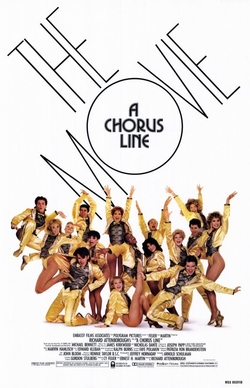
What Went Wrong: What is on stage one of the most perfect musicals ever created became merely mediocre thanks to Richard Attenborough's uninspired direction and indifferent vocal performances to an over-synthesized orchestration of the score. The screenplay puts too much emphasis on the Zach/Cassie relationship, shortchanging several other characters and undermining the basic theme of the extraordinary lives of ordinary people. “They're all special!” Cassie declares of her fellow auditionees—but apparently some are more special than others.
Why It Deserves a Second Chance: See above, re: one of the most perfect musicals ever created.

The Phantom of the Opera, 2004
What Went Wrong: Joel Schumacher and Andrew Lloyd Webber were so busy making sure Gerard Butler and Emmy Rossum looked pretty that they forgot to see if they sounded good. When you're telling the story of a repulsively hideous yet remarkably talented musician, this is an even bigger drawback than usual. The result is nice to look at but bland and emotionally uninvolving, like staring at a Harlequin Romance cover for two and a half hours.
Why It Deserves a Second Chance: Even more than most musicals, Phantom really needs a strong team behind it to overcome its inherent flaws. Given leads who can handle Lloyd Webber's sweeping score, and a director who can help them tap into the darkness and visceral passions lurking under the melodrama, it can be both lavish and moving.

Rent, 2005
What Went Wrong: To his credit, Christopher Columbus did try to do right by Jonathan Larson's turn-of-the-millenium update of La Boheme. But the results are hit-and-miss due to the clumsy staging of several numbers and an original cast that's now a little too old to be dancing on tables and singing about sticking it to the Man. (Then again, Brittney Spears was mentioned for a major role at one point, so that may be the lesser of two evils.)
Why It Deserves a Second Chance: Rent has the makings of an energetic, inventive movie about it, but the director of Home Alone and Harry Potter is not the person to bring it out. It needs someone with a more stylized approach who's not afraid of the darker aspects of the story (including a girl who commits suicide when she discovers she's HIV-positive, a drug addicted stripper, and a veritable chorus of homeless people) to really make it sing.
Your turn: what movie musical really let you down, and you want to see done justice?
Alas, Little Shop's popularity and nostalgia factor make it a prime remake target by Hollywood standards. But what about the musicals that didn't get it right the first time around? The ones that had the highest of Broadway pedigrees, but suffered on film from bad casts, incompetent rewrites, and clumsy direction. They deserved better; why not take another crack at them for a change? Leave the denizens of Mushnik's Flower Shop alone—here are five musicals that really need someone to come in and make them over:
Man of La Mancha (1972)
What Went Wrong: One of the classic examples of casting big-name film stars in a musical they have no business being in, Man of La Mancha features the woefully miscast Peter O'Toole and Sophia Loren slogging their way through the story of mad knight Don Quixote and struggling with a score neither of them is prepared to manage. (O'Toole used a voice double, but this didn't help any, especially when paired with his embarrassing attempt at lip synching.)
Why It Deserves a Second Chance: Man of La Mancha has some wonderfully soaring songs (particularly Quixote's “Duclinea” and “The Impossible Dream”)--it would be a joy to see them in a movie that does them justice. And while the theme of fighting for justice in a profoundly unjust world might not be what Cervantes had in mind when he first penned his satire of chivalry, it's still a good message to send to an increasingly cynical world.

The Wiz (1978)
What Went Wrong: Man of La Mancha has actors who can't sing; The Wiz has the inverse problem: singers who can't act. Diana Ross and Michael Jackson are icons of popular music with very good reason, but it's embarrassing to watch them try to perform when the music stops (particularly Ross, who turns Dorothy into an unsympathetic whiner). Director Sidney Lumlet and screenwriters William F. Brown and Joel Schumacher don't help either, creating a poorly paced, heavy-handed story filled with broad stereotypes.
Why It Deserves a Second Chance: The Wizard of Oz is one of those stories that can stand up to numerous revisions—as proven by everyone from the Muppets to Gregory Maguire—and the idea of an all-black retelling using New York City as the model for Oz is a good one that can be interpreted well. The stage musical hews pretty close to the original L. Frank Baum novel, which would make it stand apart from the classic MGM film.
A Chorus Line (1985)
What Went Wrong: What is on stage one of the most perfect musicals ever created became merely mediocre thanks to Richard Attenborough's uninspired direction and indifferent vocal performances to an over-synthesized orchestration of the score. The screenplay puts too much emphasis on the Zach/Cassie relationship, shortchanging several other characters and undermining the basic theme of the extraordinary lives of ordinary people. “They're all special!” Cassie declares of her fellow auditionees—but apparently some are more special than others.
Why It Deserves a Second Chance: See above, re: one of the most perfect musicals ever created.
The Phantom of the Opera, 2004
What Went Wrong: Joel Schumacher and Andrew Lloyd Webber were so busy making sure Gerard Butler and Emmy Rossum looked pretty that they forgot to see if they sounded good. When you're telling the story of a repulsively hideous yet remarkably talented musician, this is an even bigger drawback than usual. The result is nice to look at but bland and emotionally uninvolving, like staring at a Harlequin Romance cover for two and a half hours.
Why It Deserves a Second Chance: Even more than most musicals, Phantom really needs a strong team behind it to overcome its inherent flaws. Given leads who can handle Lloyd Webber's sweeping score, and a director who can help them tap into the darkness and visceral passions lurking under the melodrama, it can be both lavish and moving.
Rent, 2005
What Went Wrong: To his credit, Christopher Columbus did try to do right by Jonathan Larson's turn-of-the-millenium update of La Boheme. But the results are hit-and-miss due to the clumsy staging of several numbers and an original cast that's now a little too old to be dancing on tables and singing about sticking it to the Man. (Then again, Brittney Spears was mentioned for a major role at one point, so that may be the lesser of two evils.)
Why It Deserves a Second Chance: Rent has the makings of an energetic, inventive movie about it, but the director of Home Alone and Harry Potter is not the person to bring it out. It needs someone with a more stylized approach who's not afraid of the darker aspects of the story (including a girl who commits suicide when she discovers she's HIV-positive, a drug addicted stripper, and a veritable chorus of homeless people) to really make it sing.
Your turn: what movie musical really let you down, and you want to see done justice?
Subscribe to:
Posts (Atom)